
Copilot in retail business: unlocking new opportunities

Azure Databricks is a unified software platform for working with cloud data warehouses, analyzing and processing data, and machine learning. Azure Databricks allows you to work with large amounts of data and use technologies that are combined under the term Big Data. Azure Databricks is used to:
The Azure Databricks platform uses cloud clusters for computing and can work with data both in cloud storage and in “on-premises” storage. For the user, this means the following: you do not need to maintain special local storages, invest in server hardware, buy expensive computers with powerful computing modules—all this is already available in Azure Databricks. The user gets a ready-to-use platform that will work correctly on a regular office laptop or PC. Another significant advantage of the fully cloud-based Azure Databricks infrastructure is the highest level of information protection. Microsoft invests $1 billion annually in cybersecurity research and development: the company implements its own security solutions with the help of 3,500 permanent specialists. Your data will, firstly, be consolidated in one place and available for sharing through Azure Databricks technologies, secondly, all derived analytical calculations and analytical materials (diagrams, graphs, visualizations of mathematical models) created on their basis will also be stored on the cloud in a single Microsoft ecosystem. Thus, Azure Databricks fully addresses the issue of corporate data protection, and no additional security measures are required.

If your business collects a large amount of data on business activities and you want to make more informed and effective decisions based on this information (data-driven approach), you can do it with Azure Databricks. This analytical platform is a universal tool for working with data, and the built-in functionality in most cases far exceeds the needs of a particular business. If at some point you need to perform a specific task or implement a new automatic analysis algorithm, Azure Databricks will be sufficient, no additional software is required.
Next, let’s take a look at the main requests related to data processing that Azure Databricks covers.

Organization, arrangement and data storage.
These tasks are the building blocks of Azure technology. Users of the system store and organize large amounts of information in various formats, each supported by one of more than 200 internal Azure products. Any tasks related to the operation, maintenance and use of big data are handled by the Azure infrastructure. Microsoft Azure Databricks technology itself is used mainly for automating analytical processes based on this data, machine learning and other distributed cluster computing functions.

Sharing and using information.
In addition to storing information directly, Azure Databricks provides the functionality to simultaneously access this data across different cloud-based software products. You can use different data in different computing processes, including automated ones, and perform other analytical actions with this information in parallel. With Azure Databricks, you can also use artificial intelligence to simplify and automate further processes.

Data analysis.
Azure Databricks is a powerful platform for analytical queries that combines user-friendly interfaces with cost-effective cloud computing resources. To simplify the interaction with the platform, administrators can set up computing clusters for non-technical professionals so that they can perform basic analytical queries without having to understand the complexities of cloud programming. Data analysis can be performed by writing code in several programming languages supported by Azure Databricks.

Prediction of performance.
With the help of calculations, you can build mathematical models with predicted values of variables in future periods of business activity. Azure Databricks provides a graphical display of the calculations with the ability to integrate the results into Microsoft Power BI for even better visualization and reporting based on the calculated values.

Automation of routine analytical processes.
You can automate many processes within Azure Databricks, including data collection, data cleansing and transformation, automatic data updates and even automated analytic queries. In addition, the platform provides ample opportunities for machine learning and the use of artificial intelligence technologies, including in predictive processes. Among the features that simplify information management within Azure Databricks, we also note: (I) automation with unique scripts; (II) setting up warnings and alerts during automatic analytics to monitor data changes.

To begin with, we need to divide Azure Databricks into two fundamental components: the Azure infrastructure cloud platform and the standalone Databricks software product.
Next, we will talk in more detail about the technical component of the Azure Databricks product from the user’s point of view. What does it bring to the business, why is it convenient, and what are the technical benefits for administrators, data analysts and developers when interacting with the platform?

Apache Spark™ technology is an evolutionary extension of the Apache Hadoop cluster technology that uses the MapReduce programming model. The essence of MapReduce is as follows: one large computational task is divided into small fragments, each of which is launched and calculated in parallel on one of the cluster nodes. In this case, a cluster is a network of serial computers.
Apache Spark™ interacts with disk information 10 times faster than MapReduce and processes it 100 times faster. That’s why we say that Apache Spark™ is an evolutionary technology compared to MapReduce: they are based on the same principle of program logic, but the speed of information processing by these technologies differs tenfold. In addition, it is worth noting that Azure Databricks uses cloud clusters for computing, which means that the user does not need to use physical hardware to work with the platform.
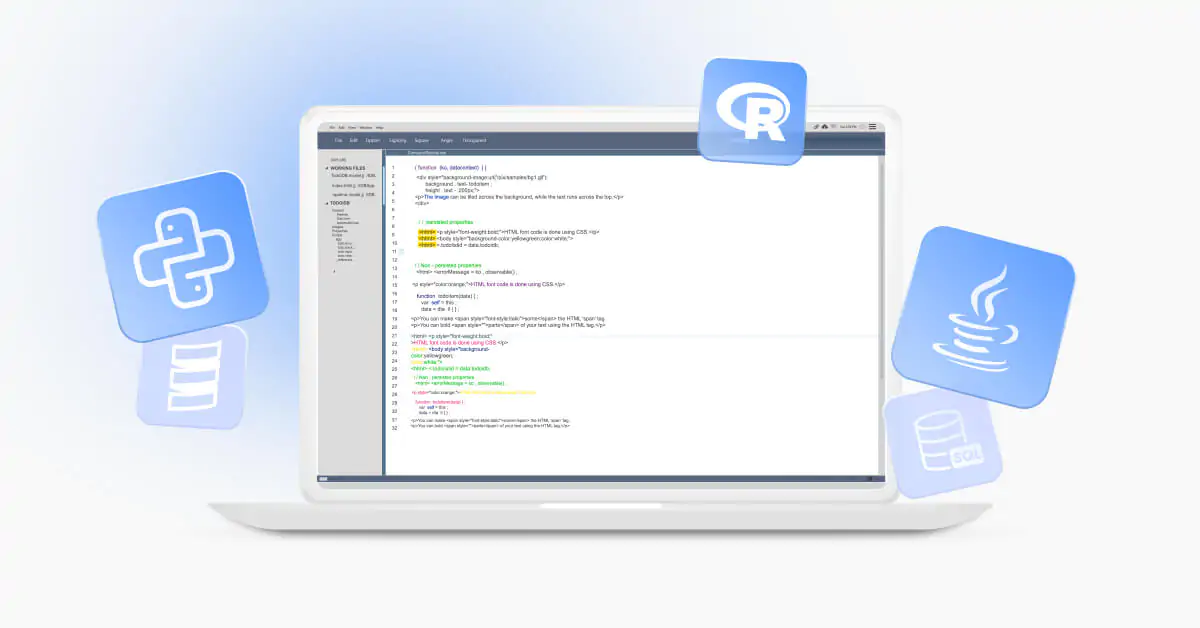
Azure Databricks supports five programming languages: Python, Scala, R, Java and SQL. This means that an automation specialist can fulfill business data processing requests much faster with a variety of ready-made commands in different languages, instead of being limited to the functionality of only one of them. This is also very convenient when performing complex, unique tasks, including setting up a multistep process of automated calculations based on many databases that are updated at different intervals. With Azure Databricks, a developer can write part of the code in one language and part in another for greater convenience. This saves experts time and universalizes interaction with the platform.
Azure Databricks also supports machine learning frameworks and software libraries: TensorFlow, PyTorch and Scikit-learn. This functionality is also designed to simplify the interaction with the platform, but in matters of machine learning based on calculations. Support for three libraries at once frees up the hands of machine learning algorithm developers: it allows them to implement combined software solutions that will be correctly interpreted by the platform.
The developers of Microsoft Azure Databricks are actively working to bring even more technologies and supported programming languages to the platform. This requires absolutely nothing from users, as the entire load falls on the system’s internal cloud clusters.
The Azure Databricks software platform can perform most data tasks that businesses may encounter. The list below describes some of these tasks but is not limited to them.
It’s hard to find the words to describe all the features of Azure Databricks exhaustively. Within the Microsoft ecosystem, any business need can be met. Related technologies within the platform extend its functionality to cover the needs of even giant businesses with hundreds of parallel processes.
The SMART business team provides services for the implementation, maintenance and development of software algorithms within the Azure Databricks system. If you have a business request to integrate Azure Databricks into your company’s software network and are ready to discuss it, then we invite you to a consultation.
We have been working with the needs of medium and large businesses for a long time, interacting with data: analysis, process automation, infrastructure development and construction. The SMART business team has created complex sequential processes for the automatic processing of large data sets with daily updates of variables. We invite you and your business to achieve the desired results in business analytics, data management through Azure Databricks and many other processes.
Azure Databricks pricing depends on three main factors:
To find out the exact cost of Azure Databricks for your company, please contact SMART business specialists for a consultation. We strive to make the partnership mutually beneficial, so we will look for options to optimize the price of Azure Databricks: platform connection, algorithm automation, integration into the software environment, training, extended service—the number of service components is determined individually for the needs of each business.
Microsoft Azure Databricks is one of the many services we offer. We have one more important section to cover about this platform to outline its potential.
Let us visualize how useful and beautiful the automation process can be. Imagine a small chain of cozy coffee shops that approached the SMART business team to automate their processes with Azure Databricks.
Azure Databricks provides businesses with a more accurate and efficient material resource management system, which saves employees time and thus saves the company money. With this approach to business, a small network can easily become a large network that operates simultaneously in many countries around the world using a single ready-made automated scheme.
If you are interested in the Azure Databricks functionality or have unique data requests, we invite you to a consultation. The SMART business team is able to integrate Azure Databricks into any software system. After implementing the service, we provide extended support and modernize the platform’s functionality to meet your business needs. We invite you to develop and cooperate!